
Every buyer wants a lower unit price, and almost every buyer who gets one discovers later that the total cost moved in the other direction. Cheap plastic bags in Singapore are absolutely achievable, but the saving has to come from the right lever, because the wrong lever simply moves the cost into damage claims, double packing and re-orders. This guide breaks the price into seven levers, shows which ones are safe to pull, and flags the two that reliably backfire.
Cheap Plastic Bags in Singapore: What the Price Actually Covers
A quoted unit price is the sum of resin, conversion, printing setup, freight and the supplier margin. Resin is the largest single component and it tracks a global market you do not control. Conversion is the cost of extruding, printing and cutting the bag. Setup is what makes small orders expensive. Freight is often the hidden line, because plastic bags are light but bulky, and a container is usually full before it reaches its weight limit.
Once you see the price this way, the conversation changes. Instead of asking for a cheaper bag, you ask which component you can legitimately reduce without moving cost somewhere you will feel it later.
Lever One: Thickness in Micron
Thickness is the most direct lever and the easiest to over-pull. Resin cost scales almost linearly with micron, so a bag specified at a thickness far above what the load requires is pure waste. Most retail and food service applications are comfortably served well below what buyers instinctively ask for, and right-sizing thickness is usually the single largest safe saving available.
The safe method is to test. Run a thinner sample through a real week of packing, count failures, and step down only until the failure rate stops being zero. Our thickness guide gives the practical starting bands by application.
Lever Two: Bag Format and Cutting Waste
Format is a quieter lever than thickness and often a larger one. A flat bag cut from a wide web produces a certain amount of trim waste, and a gusseted bag produces a different amount. Changing a specification by a few millimetres can move a bag into a more efficient cutting layout, which drops the unit price without touching the film at all.
This is also where SKU sprawl costs money. Ten near-identical sizes each carry their own setup and their own minimum, while three well chosen sizes cover the same product range with better pricing at every tier.
Lever Three: Print Coverage and Colour Count
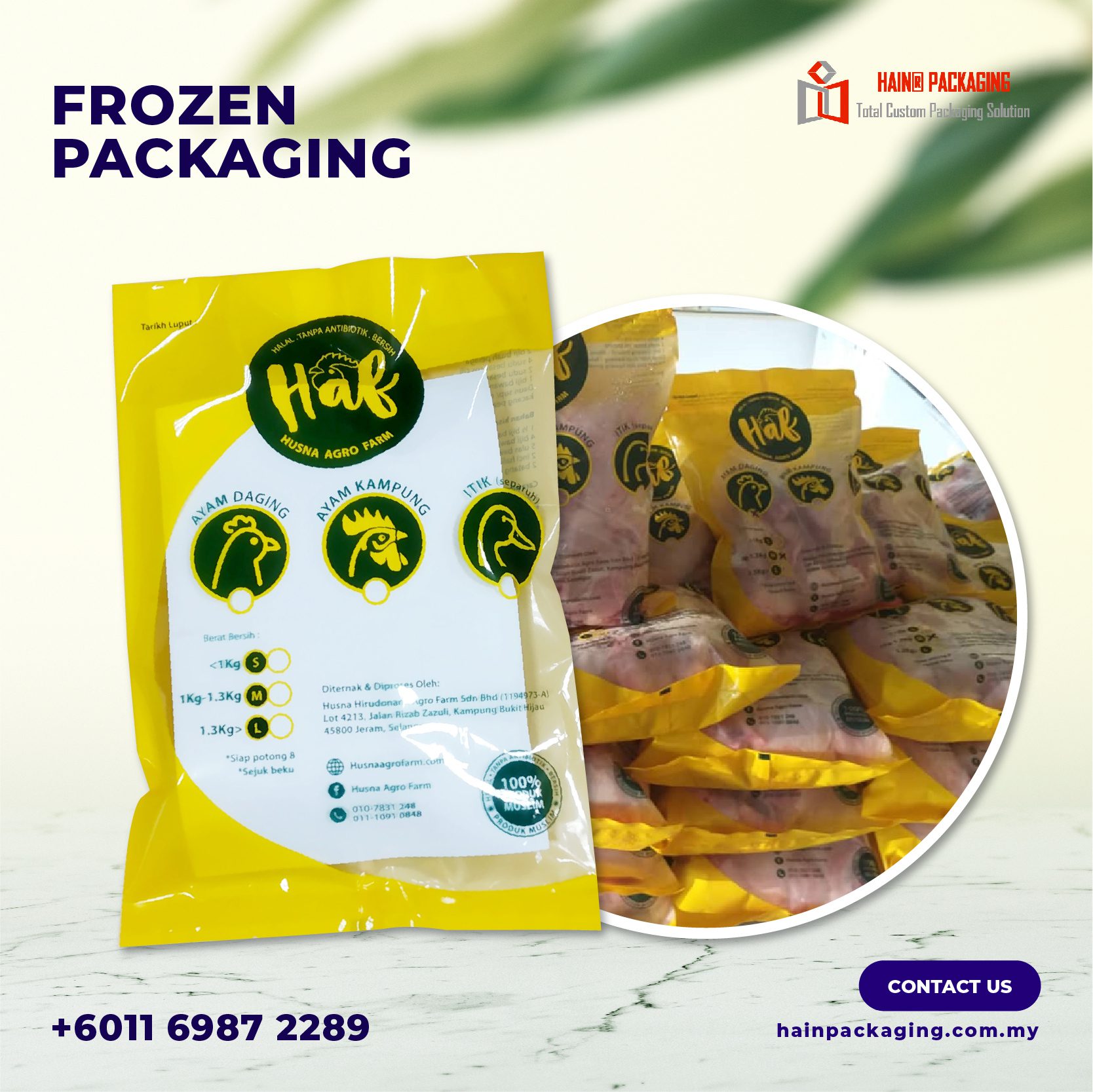
Printing is the lever most buyers forget to count. Every colour adds a plate and a pass, and full coverage ink across the whole bag costs more in ink and slows the line. A one colour logo on a strong film colour frequently outperforms a four colour reproduction visually and wins on price at the same time. If print is not doing real work for the brand, reduce it.
Continuous wrap designs, where artwork runs across the full web without registration to individual bags, are another efficient option for high volume plain stock because they remove the need for precise positioning.
Lever Four: Order Quantity and Setup Amortisation
Setup is a fixed cost. Spread it over three thousand bags and it dominates the unit price; spread it over thirty thousand and it disappears. This is the reason the per-bag price falls so steeply between quantity tiers, and it is why the cheapest per-bag quote is often attached to the largest order you did not want to place.
The correct comparison is annual cost, not unit cost. Add the carrying cost of holding nine months of stock, the risk of an artwork change, and the cash tied up in the storeroom, then compare that total against buying twice a year at a slightly higher unit price. Our wholesale plastic bag guide covers the quantity tiers in detail.
Lever Five: Freight, Packaging and Storage Density
Plastic bags are volumetrically inefficient to ship. Two specifications with an identical unit price can land at different total costs once freight is included, because one packs denser per carton than the other. Ask your supplier how many bags fit per carton and how many cartons per pallet, then compare landed cost rather than ex-works cost.
Storage has the same shape. A bulky format occupies rack space for a year and the rent is real, even if nobody books it to the packaging line.
Lever Six: Specification Discipline Across SKUs
Most mid-sized buyers carry more bag SKUs than they need. Consolidating from eight sizes to four raises the quantity per specification, moves each one into a better price tier, and reduces the chance of the wrong bag being picked on the line. Map every current size against the products it actually packs, and you will usually find two or three that can be merged without any operational pain.
Our plastic bag size chart is a useful starting template for that mapping exercise.
Reading a Quote Properly
Two quotes that look identical on unit price can differ by more than ten per cent on landed cost, because they are rarely built on the same basis. Check whether the price is ex-works or delivered, whether it includes printing plates or bills them separately, whether the thickness quoted is the finished gauge or a nominal figure, and whether the quantity tier you are comparing is the one you will actually order. Ask for the bags-per-carton figure at the same time, because that number is the quickest way to see which specification ships more efficiently.
Lever Seven: Re-Order Rhythm and Resin Timing
Resin pricing moves. Buyers who place one large order a year take a single bet on that market, while buyers who order quarterly average it out. Neither is right in all conditions, but a deliberate rhythm beats a reactive one, because a forced emergency re-order at peak season is always the most expensive bag you will buy.
Agree a standing schedule with your supplier, hold a safety buffer sized in weeks of cover, and re-order against that buffer rather than against a stock count.
When Cheap Plastic Bags in Singapore Cost More Than They Save
Two levers reliably backfire. The first is thickness pulled below what the load needs, which shows up as split bags, damaged product, customer complaints and staff re-packing on the line. The second is a material downgrade to a film that does not suit the product, which shows up as condensation, aroma loss or a shorter shelf life.
There is also a waste dimension to over-thinning. Bags that fail get doubled up, and doubled bags mean more material consumed rather than less. The National Environment Agency publishes waste statistics and overall recycling figures for Singapore at nea.gov.sg, which is worth reading before you treat thinner as automatically greener.
Frequently Asked Questions
What is the cheapest way to get cheap plastic bags in Singapore?
Right-size the thickness, consolidate your sizes, and reduce print colours. Those three moves usually deliver more genuine saving than negotiating the unit price, and none of them increase failure rates.
Is a thinner bag always worse?
Not always. Many specifications are over-thick out of habit. The test is empirical: step down one band, run a full week, and count failures before stepping down again.
Why does the price drop so much between quantity tiers?
Because setup and machine time are fixed costs. Doubling the quantity roughly halves the setup component of each bag, which is why the curve is steepest at the low end.
Can I get a firm price locked in for a year?
Suppliers can hold a price for a defined period against a defined volume, but resin is a traded commodity and long locks carry risk on both sides. A quarterly schedule with a volume commitment is usually the workable middle ground.
Conclusion
Cheap plastic bags in Singapore come from good specification, not from squeezing the supplier. Right-size the micron, cut the SKU count, simplify the artwork, and buy on a rhythm that lets you average the resin market. Pull those levers and the unit price falls while the failure rate stays flat, which is the only version of cheap that survives contact with a busy packing line. Send us your current sizes and monthly volumes for a line-by-line comparison, or start with our manufacturing overview and message us on WhatsApp for a quotation.