
Why Custom Plastic Bags Matter for Singapore Businesses
Custom plastic bags Singapore are one of the highest-ROI branding tools available to local businesses. Every time a customer carries a bag bearing your logo from your store to the MRT, through Jurong, Orchard Road, or Tampines — that is free outdoor advertising. Yet many Singapore businesses undervalue what goes into ordering the right custom bag: the material, the minimum order quantity (MOQ), the print method, the lead time, and how to choose a supplier that will deliver on time.
This guide covers everything Singapore business owners, procurement managers, and F&B operators need to know before placing their first custom bag order.
What Are Custom Plastic Bags?
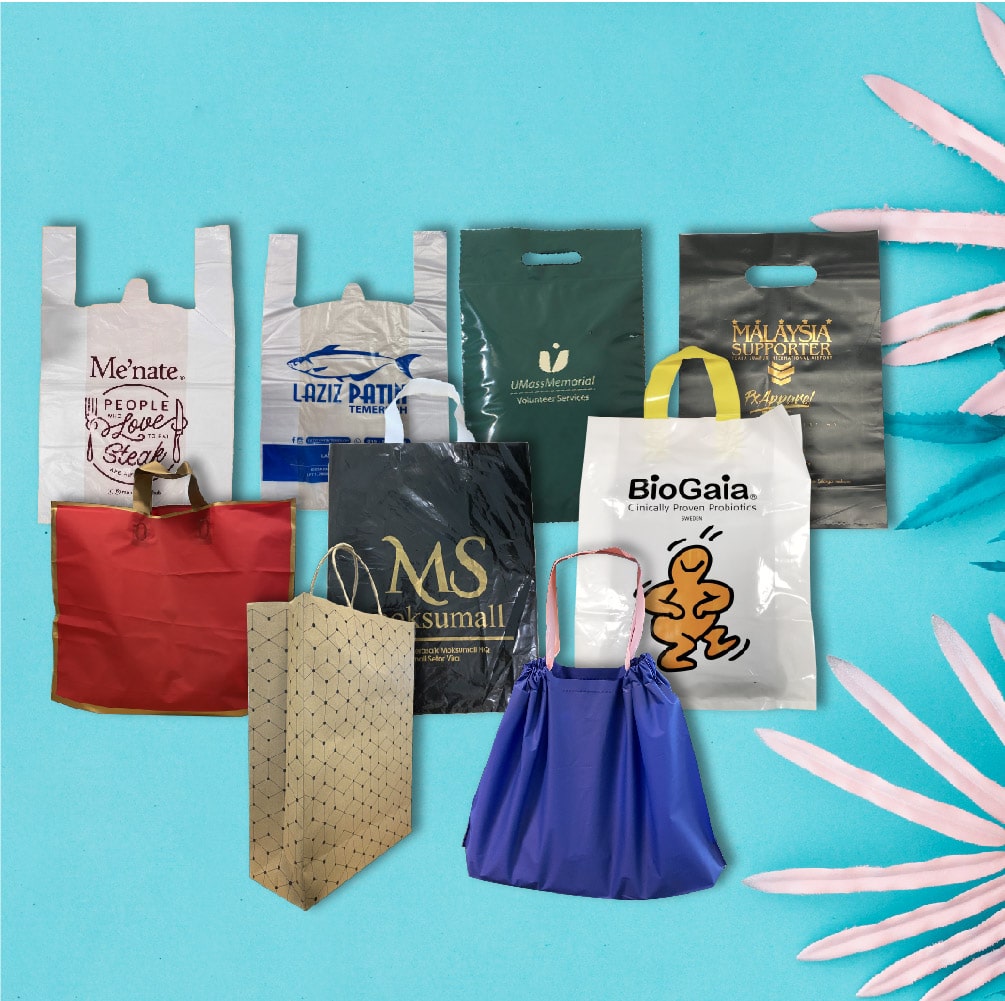
Custom plastic bags are plastic bags printed with your brand name, logo, colour scheme, or custom artwork. Unlike plain stock bags, they are manufactured to your exact specifications — material type, thickness, size, handle style, and print design.
Singapore businesses use custom plastic bags across virtually every retail vertical:
- Retail boutiques and fashion stores — premium boutique bags with soft-touch finishes
- F&B and food retail — heat-resistant bags for takeaways, delivery, and in-store use
- Pharmacies and clinics — clean, professional bags for medicines and health products
- E-commerce sellers — courier-friendly printed mailers and courier bags
- Supermarkets and convenience stores — high-volume singlet bags with brand messaging
Materials Used for Custom Plastic Bags in Singapore
HDPE (High-Density Polyethylene)
The most common material for Singapore retail bags. HDPE bags are lightweight, strong, and cost-effective. They are the standard white singlet bags you see at grocery stores and convenience shops across the island. Thicknesses typically range from 10 microns to 30 microns depending on the application.
LDPE (Low-Density Polyethylene)
More flexible and transparent than HDPE, LDPE bags offer a premium feel. These are used for boutique retail bags, apparel packaging, and applications where visual clarity and a soft texture are preferred. LDPE is also widely used for ziplock and resealable bags.
CPP (Cast Polypropylene)
CPP bags offer superior clarity and a slightly crinkly texture. They are a popular choice for food packaging in Singapore due to their excellent moisture barrier properties. Custom printed CPP bags are common in bakeries, confectionery shops, and specialty food retail.
Laminated CPP / Multilayer Film
For premium applications — especially luxury retail, cosmetics, and food that requires a high barrier against oxygen and moisture — laminated multilayer film bags provide the best print quality and structural integrity. These are more expensive but deliver a noticeably superior shelf appearance.
Print Methods for Custom Plastic Bags Singapore
Flexographic Printing (Flexo)
The workhorse of plastic bag printing. Flexo uses a flexible photopolymer plate to transfer ink onto plastic film. It offers fast production speeds and lower per-unit costs at higher volumes, making it the standard choice for MOQs above 5,000 bags. Flexo print quality has improved significantly and is now competitive with other methods for most brand applications.
Gravure Printing
Gravure uses recessed copper cylinders to hold ink, producing the highest print quality available for plastic bags. Fine details, gradients, and photographic-quality images are reproduced with exceptional accuracy. Gravure is cost-effective at very high volumes (typically 20,000+ units) but has high setup costs, making it more suitable for large brands running ongoing orders.
Digital Printing
Digital printing — typically inkjet or HP Indigo technology — requires no printing plates, enabling short runs and rapid turnaround. MOQs can be as low as 500–1,000 bags with digital printing, making it ideal for startups and small businesses testing their first custom bag design. Print quality is good but not as sharp as Gravure for fine detail work.
Screen Printing
Limited to specific bag types (typically flat surfaces and thicker materials). Screen printing is cost-effective for simple single-colour or two-colour designs but impractical for complex multi-colour artwork. Some die-cut handle bags and specialty bag styles still use screen printing for small runs.
Minimum Order Quantities (MOQ) and Pricing in Singapore
MOQ varies significantly by print method and material:
- Flexographic: Typically 3,000–10,000 bags per design
- Gravure: Typically 10,000–30,000 bags per design
- Digital: As low as 500–1,000 bags per design
Unit pricing in Singapore typically ranges from S$0.03 per bag for basic HDPE singlet bags at high volume to S$2.00+ per bag for premium laminated multi-colour boutique bags. For accurate Singapore pricing in 2026, factor in material cost, print complexity, bag size, handle type, and lead time.
Lead times range from 5–7 working days for digital printing to 3–5 weeks for Gravure-printed orders from overseas manufacturers.
Standard Sizes for Singapore Retail Bags
Custom plastic bags in Singapore are typically produced in these common dimensions:
- Small / Apparel: 22cm × 30cm to 28cm × 38cm — standard for fashion, accessories, and pharmacy
- Medium / General Retail: 32cm × 40cm to 38cm × 48cm — the most commonly used size across Singapore retail
- Large / Supermarket Style: 45cm × 55cm to 60cm × 75cm — suitable for groceries, bulk retail, and food delivery
- Extra Large / Specialty: 70cm × 90cm and above — for large-format retail, furniture accessories, and industrial use
Always request physical samples before placing large production orders. Screen-to-print variations are common, especially with handle construction and gusset depth.
Design Tips for Singapore Market
- Keep it clean. Singapore consumers respond well to minimal, professional design. Overly busy artwork does not translate well on plastic bag substrates.
- Use brand colours strategically. Bold contrast between bag colour and print works well under Singapore fluorescent retail lighting.
- Include a tagline or call to action. Your bag is a micro-billboard. Add a website URL, social handle, or promotional message to drive repeat engagement.
- Test your design at actual bag size. A design that looks great on screen can become illegible when scaled down to a small singlet bag.
- Consider Pantone Matching System (PMS) colours. Flexo and Gravure printing use PMS colour matching. Provide your brand PMS codes to your supplier for accurate colour reproduction.
How to Choose a Custom Plastic Bag Supplier in Singapore
Not all plastic bag suppliers are equal. Here is what to evaluate before placing an order:
- Sample quality. Request physical samples before committing. The sample bag should match the production quality you expect.
- Communication and responsiveness. A supplier who responds within 24 hours during Singapore business hours is worth paying slightly more for.
- Production capabilities. Ask what print methods they offer. A supplier with only one print method may not be the right fit for your project.
- MOQ flexibility. If you need 500 bags, do not work with a supplier quoting 10,000 minimum.
- Certifications and compliance. Food-grade bags must comply with Singapore NEA and relevant food safety standards. Request material safety data sheets (MSDS) for food-contact applications.
- Production location. Local Singapore suppliers offer faster turnaround. China and Malaysia manufacturers offer lower prices but longer lead times and shipping costs.
Common Mistakes to Avoid When Ordering Custom Plastic Bags
- Skipping the sample. Always order a pre-production sample before committing to a full production run. Colour deviation and material differences are common.
- Underestimating lead time. Custom bags are not available next-day. Plan 3–8 weeks ahead depending on print method and supplier location.
- Not specifying exact dimensions clearly. Ambiguous sizing leads to bags that are too small or too large for their intended use. Provide exact width × height × gusset measurements in mm.
- Choosing the wrong material for the application. A delicate HDPE bag will tear with heavy groceries. Match material and thickness to actual use.
- Low-resolution artwork. Provide artwork at minimum 300 DPI in CMYK colour format. Low-resolution files result in blurry or pixelated print.
Frequently Asked Questions
What is the minimum order quantity for custom plastic bags Singapore?
Minimum order quantities in Singapore range from 500 bags for digital printing to 3,000–10,000 bags for flexographic printing. Gravure printing typically requires 10,000+ units. Some suppliers offer smaller MOQs for simpler single-colour designs.
How long does it take to produce custom plastic bags?
Production lead times range from 5–7 working days for digital printing to 3–5 weeks for flexographic and gravure orders. Add shipping time if your bags are manufactured overseas.
Can I get a sample before placing a full order?
Most Singapore suppliers offer pre-production samples for a small fee that is typically credited against your final order. Always request samples before committing to large production runs.
What file format do I need for my bag artwork?
Provide artwork in AI (Adobe Illustrator) or EPS format with fonts converted to outlines. High-resolution PDF files are also accepted. Ensure all colours are in CMYK and artwork is provided at actual print size with 3mm bleed on all sides.
Are custom plastic bags food-safe in Singapore?
Food-grade plastic bags used for direct food contact in Singapore must comply with relevant food safety regulations. Request material certifications and MSDS from your supplier to confirm compliance before using bags for food packaging.
What is the difference between HDPE and LDPE plastic bags?
HDPE bags are more rigid, lightweight, and noisy when handled. LDPE bags are more flexible, transparent, and have a softer texture. HDPE is standard for high-volume singlet bags; LDPE is preferred for premium retail and boutique applications.
Custom plastic bags Singapore are a powerful, cost-effective branding tool — but only when you understand the material, print method, and supplier selection process. Use this guide to make an informed decision before your next order.