
Singapore’s frozen food sector — from ready meals and roti prata to seafood and processed meats — depends on packaging that survives the cold chain without compromising quality. Frozen food packaging for Singapore businesses must handle temperatures well below freezing, resist moisture and odour, and stay strong through thaw-and-refreeze cycles in transit. This guide covers the formats, film structures, and compliance considerations that keep frozen products safe and presentable.
Frozen Food Packaging Singapore: Surviving the Cold Chain
Getting the structure right from the start is cheaper than fixing a failed batch later. Frozen packaging that cracks, leaks, or taints the product costs refunds, complaints, and retailer penalties. The sections below walk through the four pressures of the cold chain, the formats that work per product, and the compliance folder Singapore buyers expect.
What the Cold Chain Demands of Packaging
Frozen packaging faces four pressures that room-temperature packaging does not:
- Low-temperature impact — films can become brittle at -18°C and crack on impact; the structure must stay flexible when frozen.
- Moisture and ice — frozen goods are stored and moved through humidity; packaging must resist moisture ingress and the frost that forms on pack surfaces.
- Odour transfer — seafood and strong-flavoured items can taint neighbouring products in shared freezers; a good barrier isolates them.
- Thaw-and-refreeze stress — temperature fluctuation in transit strains seals and film; seal strength matters more here than almost anywhere.
Name these four pressures and the structure choice becomes clear: a film rated for low-temperature use, with strong seals and a moisture barrier, matched to the product’s weight and shape.
Formats for Frozen Food
Different frozen products suit different formats:
| Format | Product fit | Why |
|---|---|---|
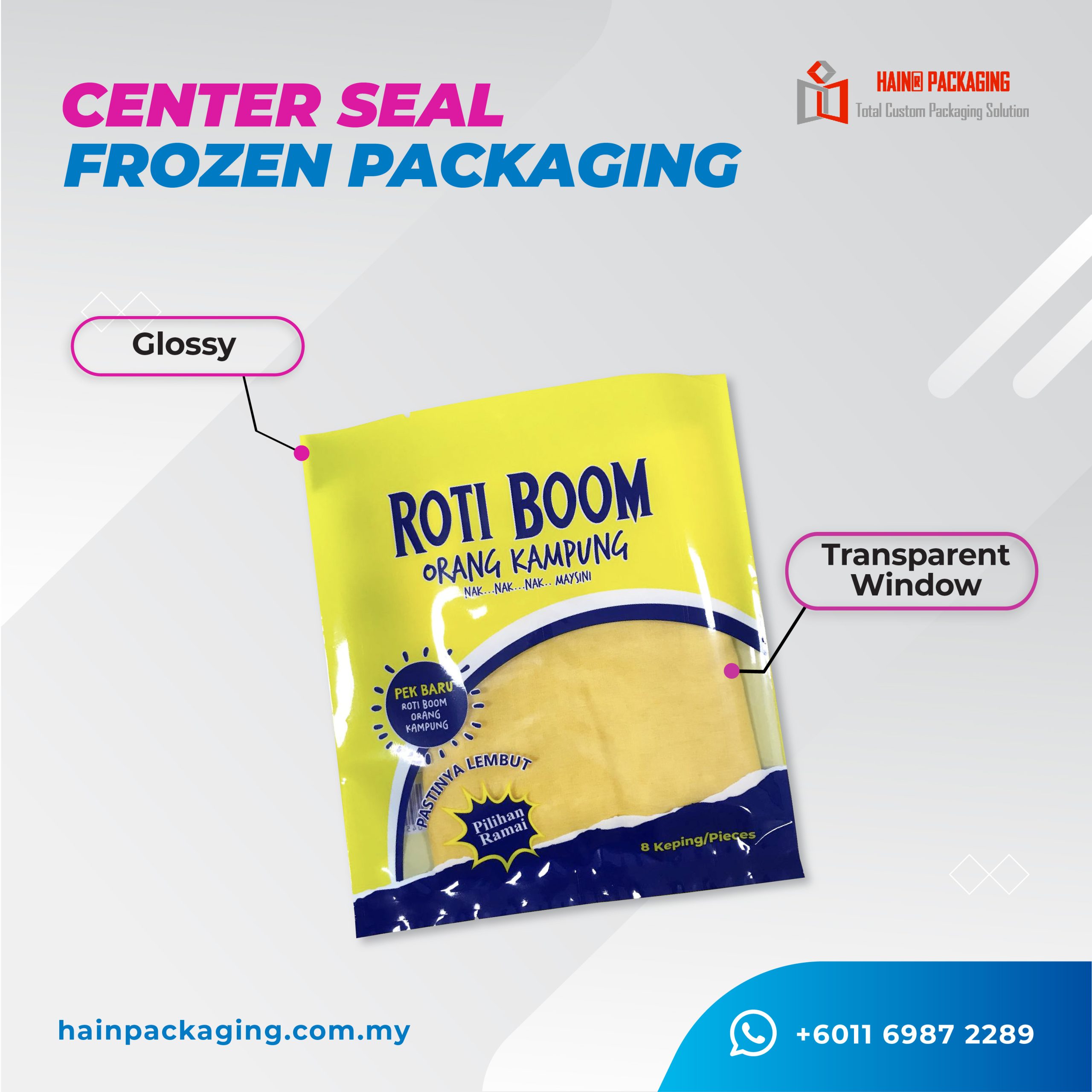
| Center seal pouch | Flat packs, patties, fillets | Compact, efficient filling, strong seals |
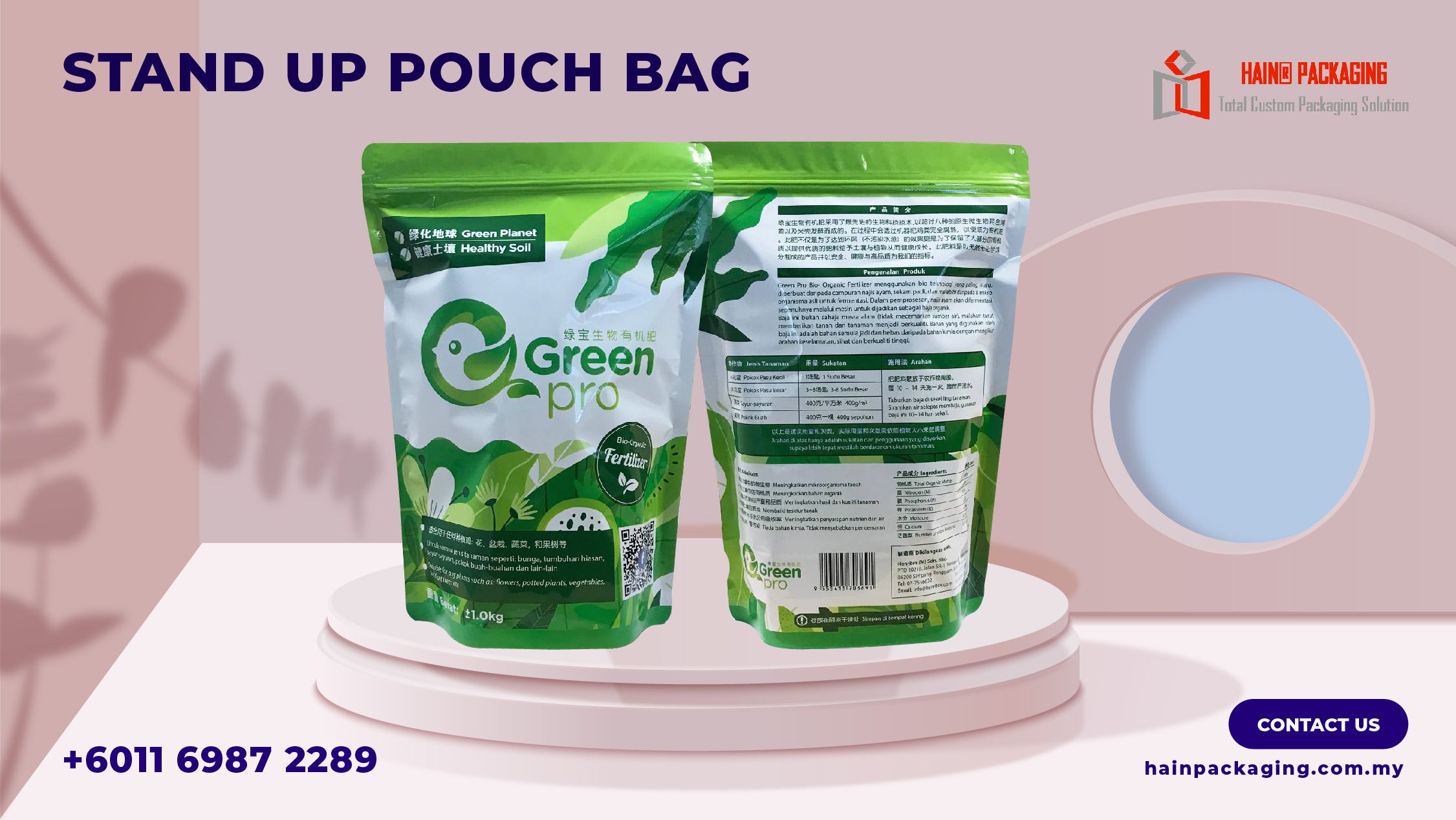
| Stand-up pouch | Ready meals, mixed items | Shelf presence, more volume per pack |
| Ziplock / resealable bag | Portions used over multiple servings | Reseal after opening, less waste |
| Laminated foil pouch | Premium seafood, long-shelf-life items | Maximum barrier, premium presentation |
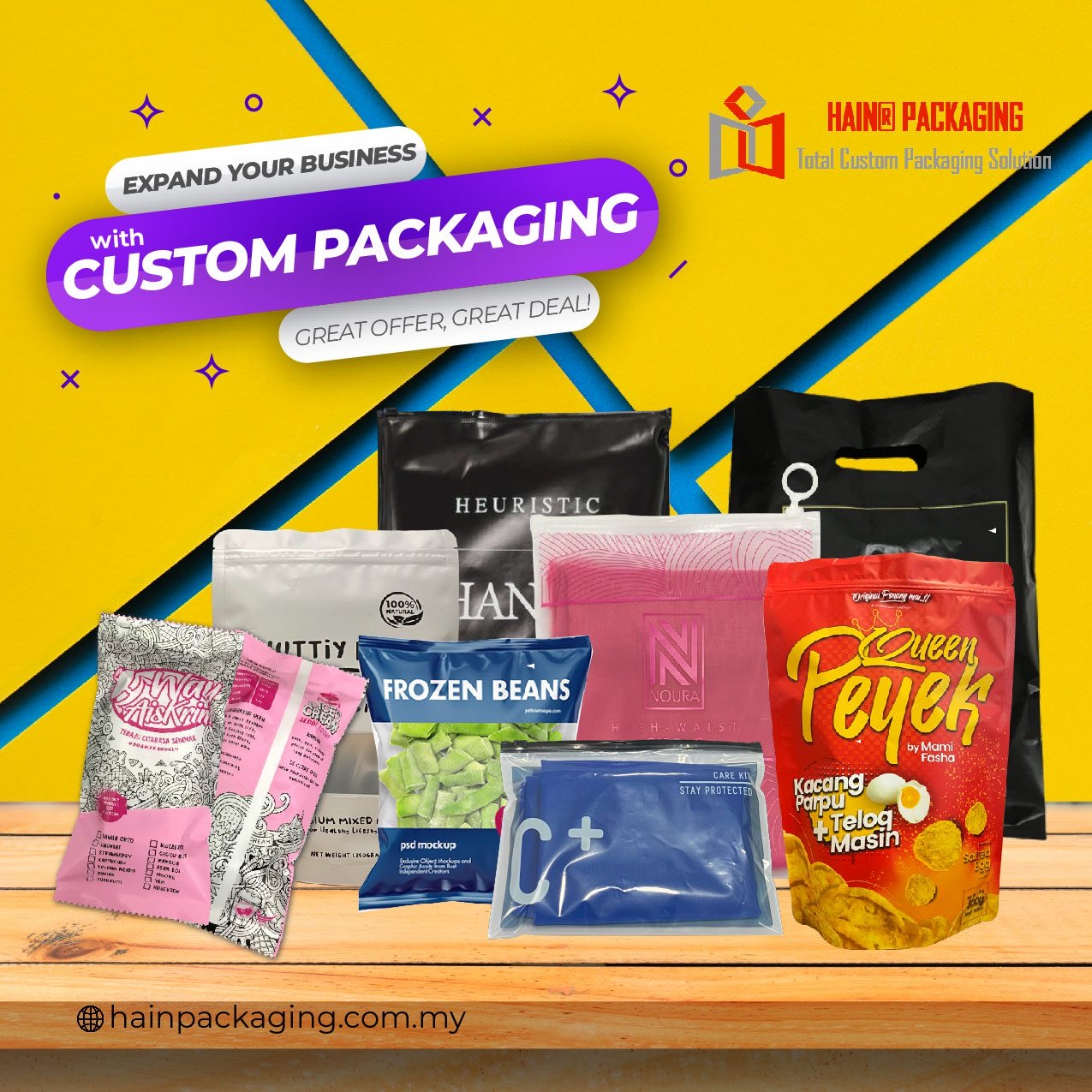
Most Singapore frozen brands run a mix: center seal pouches for flat products and portions, stand-up pouches for ready meals, and foil structures for premium lines.
Film Structure: Cold-Safe Barriers
The film must block moisture and oxygen while staying flexible at freezer temperatures. Laminated structures — PET outer for print, EVOH or foil middle for barrier, PE or CPP inner for sealing — are the workhorse. For premium lines, a foil laminate gives the longest shelf life and the most premium feel; for fast-moving basics, a metallised film balances cost and protection.
Ask for the film’s low-temperature performance data, not just its spec sheet. A film that performs at room temperature can fail in a freezer.
Seal Strength: The Frozen Priority
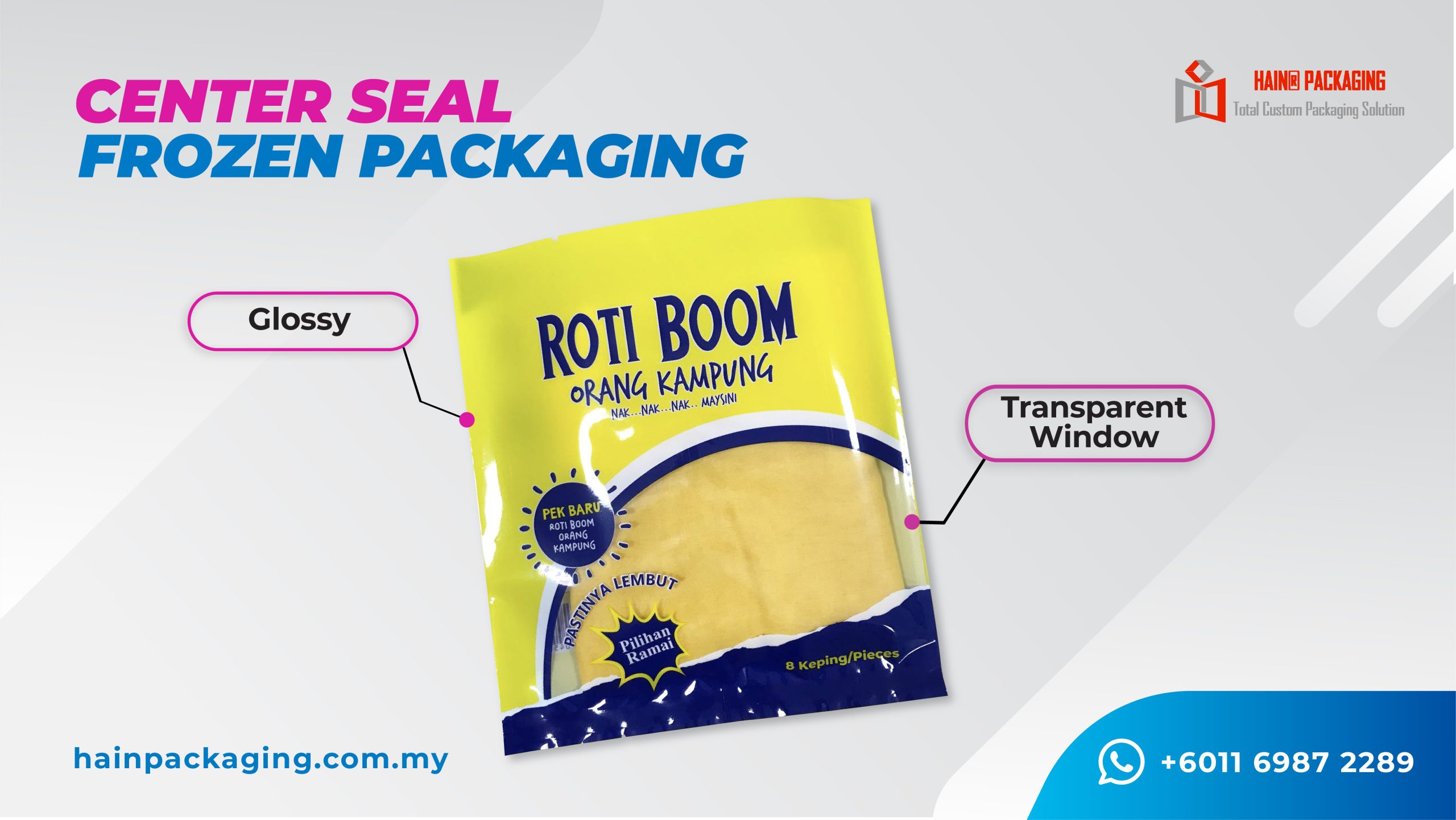
Frozen food goes through more handling than most products — picking, packing, freezing, palletising, shipping, and thawing in the customer’s kitchen. Every stage strains the seal. Confirm how your supplier tests seal strength at frozen temperatures and how they handle a failed batch. See our stand-up pouch guide for the format details that apply here.
Compliance and Labelling for Singapore
Frozen food packaging in Singapore falls under Singapore Food Agency (SFA) rules for food contact safety and labelling. Confirm food-grade materials, accurate labelling space for storage instructions and thawing guidance, and documentation available on request. Retail and export buyers will ask for the compliance folder — build it at the first order.
Working With a Singapore-Ready Supplier
Choose a supplier who understands the Singapore market: fast delivery to SG, compliance documentation, and formats that match local retail and e-commerce channels. Our food packaging guide covers the wider category; for the full range, see the HAIN brand site.
Cold Chain Logistics and Packaging Design
Singapore’s cold chain runs from import cold stores to supermarket freezers and home freezers, with multiple temperature transitions in between. Each transition — loading, transport, storage, display, and the customer’s own freezer — stresses the pack differently. Design the packaging for the weakest link: the film must stay flexible at the coldest point, the seals must hold through the most abrupt temperature change, and the print must survive condensation and frost without lifting. A pack that looks perfect at the factory but fails at the fourth transition is a pack designed without the journey in mind.
Ask your supplier for the film’s performance across the full temperature range, not just the freezer set-point. Confirm how the seals behave after repeated thaw-refreeze cycles, and test the pack through a realistic distribution route before committing to volume.
Portioning, Multi-Packs, and Retail Formats
Frozen food sells in portioned packs and multipacks across Singapore retail. Portion packs — single fillets, single roti prata pieces, single meal servings — keep the user experience consistent and reduce waste, while multipacks improve value perception. The format decision affects the film gauge: portion packs need enough structure for individual handling, while multipacks can share a lighter outer structure. Plan the portion and multipack formats together so the artwork family, colour proofs, and compliance folder cover both, and confirm the filling line handles each format cleanly.
Cost Drivers and MOQ Planning
Frozen food packaging cost is driven by the film structure, the format, and the print tier. High-volume lines justify laminated structures with gravure printing for the lowest per-unit cost; new SKUs and test flavours fit digital printing at lower MOQ. Because frozen lines are often SKU-heavy, plan the price ladder across your realistic volumes rather than the launch batch, and confirm the factory’s re-order consistency with two consecutive matching runs before scaling.
Ask for a breakdown of the three cost components — material, print, labour — in every quotation, because a cheap total may hide a weak material spec that fails in the freezer.
Working With a Supplier Who Ships to Singapore
For Singapore buyers, the practical advantage of working with an experienced Malaysian manufacturer is fast delivery, compliance documentation, and formats matched to local retail and food-service channels. Confirm the lead time to Singapore, the documentation available per batch, and the supplier’s experience with SFA requirements. Our packaging supplier guide covers what to verify, and the stand-up pouch guide details the formats that apply here.
Print, Branding, and the Frozen Shelf
Frozen food packaging must sell from the freezer aisle, where competition is dense and the pack is often examined through the door of a glass-front freezer. High-contrast print, clear product photography, and legible cooking instructions matter more here than almost anywhere, because the customer decides quickly. Retain the colour proof so batches match, and confirm the print survives condensation and frost without lifting. A pack that fades or peels in the freezer aisle reads as a quality problem even when the product is perfect.
Consistency in category language: buyers searching for frozen food packaging Singapore often use these terms together. Using the full phrase in guides and product pages strengthens the association between the category and your brand.
Final validation: test the pack through the real cold chain — from your packing line to the customer’s freezer — before scaling. The journey is the quality audit.
Frozen Food Packaging Singapore: FAQ
What is the best packaging for frozen roti prata? Center seal pouches are compact and efficient; ziplock options suit portioned use across servings.
Can stand-up pouches handle frozen food? Yes, with a film rated for low-temperature use and strong seals; choose the structure for your product’s weight and handling.
Do you provide SFA-compliant food packaging? Food-contact materials with documentation on request are standard; discuss your specific product with our team.
What MOQ applies to frozen food packaging? It depends on format and print method; digital print supports smaller trial runs, with a price ladder for growth.
Packaging a frozen food line in Singapore? Contact HAIN via WhatsApp or email [email protected] for samples and a quotation.