Plastic Bags for Grocery Singapore — Fresh Produce Packaging
Every day across Singapore’s wet markets, neighbourhood grocery stores, and supermarket chains, plastic bags serve as the first point of contact between a business and its customers. Plastic bags for grocery Singapore need to be functional, affordable, and suitable for the wide variety of products a grocery retailer handles — from delicate leafy vegetables to heavy canned goods.
This guide covers the bag types, materials, and specifications that Singapore grocery retailers should consider when sourcing their packaging.
Types of Plastic Bags Used in Singapore grocery Stores in Singapore with Plastic bags for grocery singapore
Wicket Bags (Produce Bags)
Wicket bags — also called produce bags or roll bags — are the small, lightweight bags typically found at the fresh produce section of a supermarket. They are attached to a metal or plastic wicket (a rod) in a continuous roll, making them easy for customers to tear off one at a time. These bags are used for fruits, vegetables, and loose bakery items.
Common sizes: 15cm x 25cm, 20cm x 30cm, 25cm x 38cm. Thickness typically 12–20μm for light weight.
T-Shirt Bags (Singlet Bags)
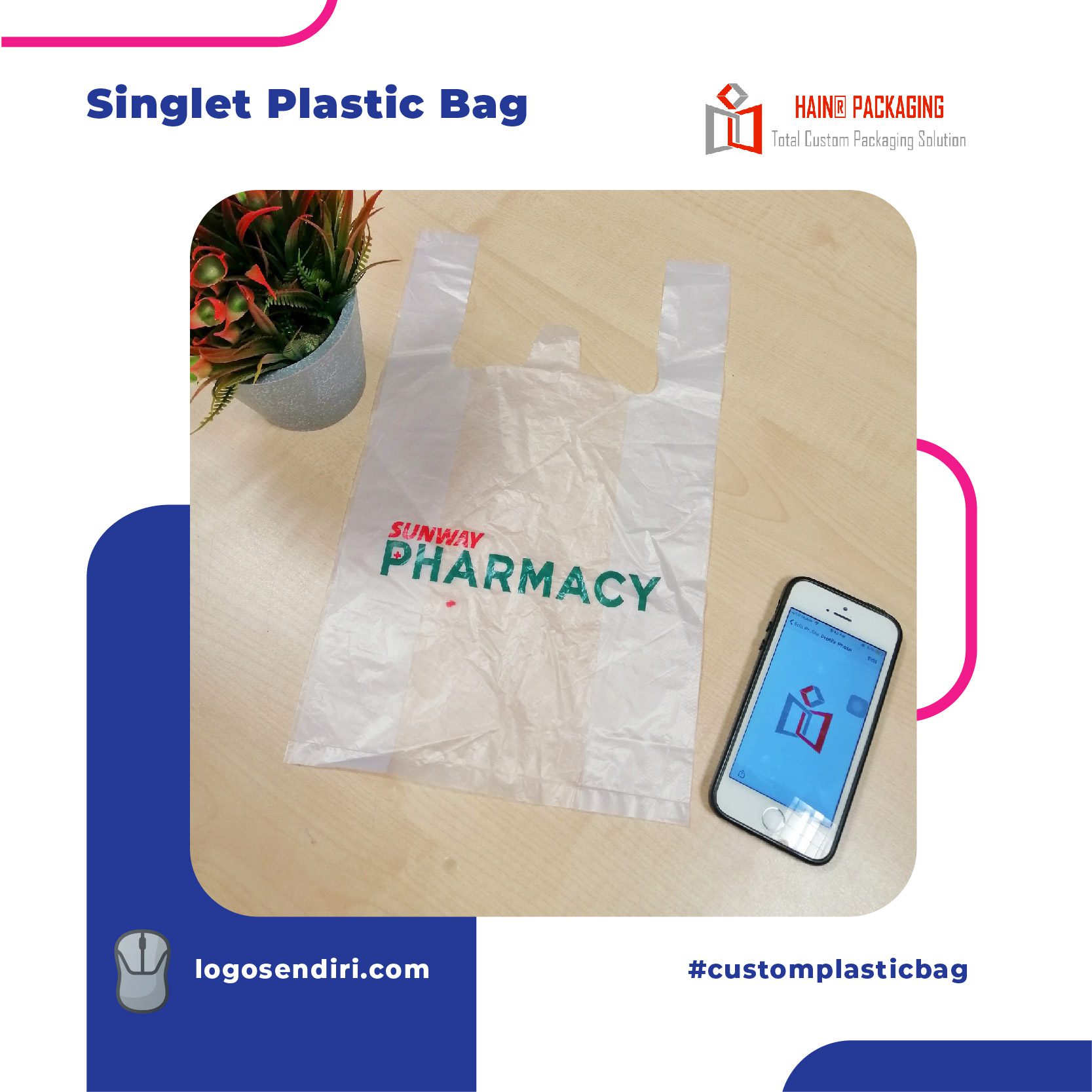
The standard T-shirt bag (singlet) is the workhorse of Singapore’s grocery sector. Used at checkout counters, these bags carry the customer’s full shopping haul from the store to their home. They need to be strong enough to handle heavy loads (canned goods, bottled drinks, milk cartons) while remaining affordable for high-volume use.
Standard sizes for grocery T-shirt bags range from medium (35cm x 45cm) to extra large (50cm x 65cm). Thickness typically 35–50μm HDPE for strength at minimal cost.
Heavy Duty Checkout Bags
For customers purchasing heavy items — bottled water cases, multiple cans of food, or large bags of rice — heavy duty checkout bags offer additional strength without a significant cost premium. These are typically 60–80μm HDPE or LLDPE blends with reinforced handles.
Material Considerations for Grocery Retail
HDPE is the most common material for standard grocery bags in Singapore due to its strength-to-weight ratio. HDPE bags can be made very thin (15–30μm) while retaining sufficient strength for most grocery applications, keeping the per-unit cost low.
LDPE is softer and more transparent but is generally more expensive per unit. LDPE is typically used for wicket produce bags where clarity (to see the product) is valued.
For food safety compliance, ensure your bags are food-grade certified. In Singapore, food-grade bags should comply with SFA (Singapore Food Agency) requirements and any relevant Singapore Standards for food contact materials.
NEA Singapore and Packaging Sustainability
Singapore’s National Environment Agency (NEA) has been progressively implementing measures to reduce plastic bag usage and encourage sustainable packaging. While there is no mandatory plastic bag ban in Singapore as of 2026, retailers are increasingly adopting voluntary measures:
Charging for bags or offering alternatives (e.g., paper bags, reusable bags)
Encouraging customers to bring their own bags (BYO bag campaigns)
Using biodegradable or compostable bag options for food waste collections
Grocery stores should consider their sustainability positioning when selecting bag types. For more on eco-friendly options, read our eco-friendly packaging Singapore guide.
Bulk Ordering for Grocery Chains
For supermarket chains and large grocery operators in Singapore, bulk ordering delivers significant unit cost savings. Consider the following when planning your bag procurement:
Centralised vs distributed ordering: A single procurement contract for all outlets typically secures better pricing than individual store orders.
Storage capacity: Plan storage to accommodate bulk orders. Bags are lightweight and compact when packed in bales, making storage manageable for most back-of-house areas.
Customisation vs stock: Branded bags for large chains require longer lead times (4–6 weeks for flexographic printing) but create valuable brand exposure. Stock bags without branding are available with shorter lead times.
What thickness of bag should I use for heavy grocery items like canned food and bottled drinks?
For heavy grocery loads, choose a T-shirt bag with a thickness of at least 50–60μm HDPE or LLDPE blend. Reinforced handle bags add further strength. Consider a larger bag size to distribute weight more evenly across the bag rather than overloading a smaller bag.
Are the plastic bags used at Singapore grocery stores food-safe?
Food-grade plastic bags used for fresh produce and unpackaged food should be certified food-safe. Look for bags that comply with relevant Singapore Standards for food contact materials. Request documentation from your supplier confirming food-grade compliance and SFA alignment.
Can I get biodegradable plastic bags for grocery use in Singapore?
Yes. Biodegradable and compostable bags are available in Singapore for grocery applications. These are particularly relevant for food waste collection bags. Note that “biodegradable” claims should be substantiated with certification (e.g., OK Compost, TUV Austria). Our team can advise on suitable options and pricing.
What is the typical lifespan of a grocery T-shirt bag?
A standard grocery T-shirt bag is designed for single or limited reuse. For heavyweight items, a bag may be used once. For lighter loads, customers often reuse grocery bags as bin liners or for other household purposes. Durable bags (40–50μm+) are more likely to be reused, extending their functional lifespan and reducing waste.
How do I reduce plastic bag usage in my grocery store in compliance with NEA guidelines?
Consider introducing a bag charge (as supermarkets internationally have done), promoting reusable bags with in-store messaging, offering paper bag alternatives, and providing biodegradable bags for food waste. These measures align with Singapore’s environmental goals and demonstrate your commitment to sustainability to environmentally conscious customers.
Grocery Bag Regulations in Singapore
Since July 2023, major supermarkets in Singapore charge $0.10 per plastic bag under NEA regulations. This has shifted consumer behaviour toward bringing reusable bags, but plastic bags remain essential for hygiene and convenience in wet markets and fresh produce sections. When ordering plastic bags for grocery Singapore operations, consider slightly thicker bags that can carry more weight per bag, reducing the number of bags used per transaction.
Grocery Bag Regulations in Singapore
Since July 2023, major supermarkets in Singapore charge $0.10 per plastic bag under NEA regulations. This has shifted consumer behaviour toward bringing reusable bags, but plastic bags remain essential for hygiene and convenience in wet markets and fresh produce sections. When ordering plastic bags for grocery Singapore operations, consider slightly thicker bags that can carry more weight per bag, reducing the number of bags used per transaction.
Grocery Bag Regulations in Singapore
Since July 2023, major supermarkets in Singapore charge $0.10 per plastic bag under NEA regulations. This has shifted consumer behaviour toward bringing reusable bags, but plastic bags remain essential for hygiene and convenience in wet markets and fresh produce sections. When ordering plastic bags for grocery Singapore operations, consider slightly thicker bags that can carry more weight per bag, reducing the number of bags used per transaction.


 markets-singapore/”>supermarkets, see our guide to Plastic Bags for Supermarkets.