
Stand Up Pouch Material Guide Singapore — Comparing Structures
The performance of a stand up pouch is determined almost entirely by its material structure — the layers of film and foil that make up the laminated pouch body. Understanding these structures helps Singapore buyers
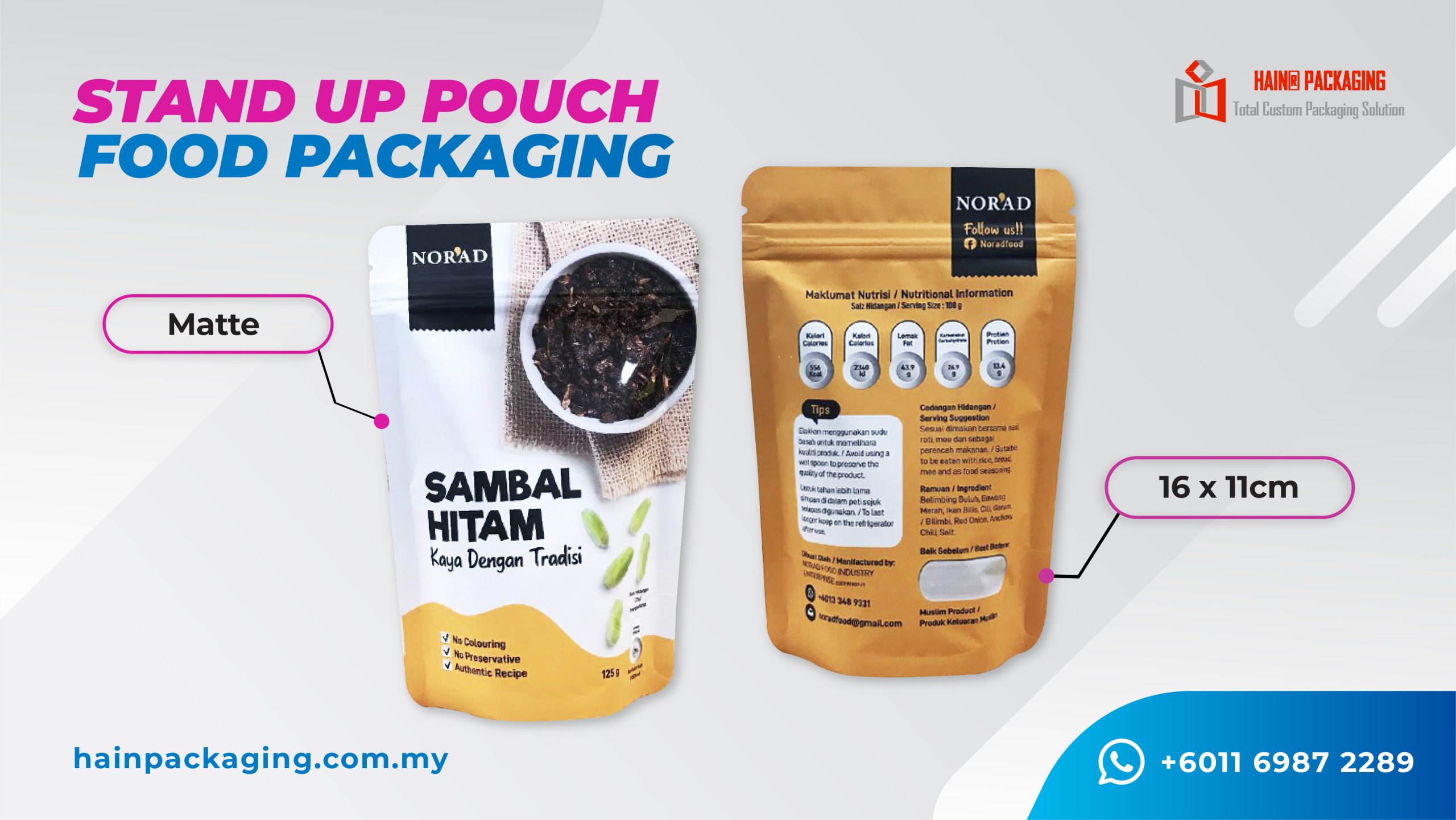
make informed decisions about barrier protection, cost, transparency, and sustainability. Here’s the complete guide to stand up pouch materials.
How Laminate Structures Work
A stand up pouch is built from three functional layers:
- Outer layer (substrate): Provides structural strength, print surface, and protection against punctures, tears, and UV light
- Barrier layer: Blocks the passage of oxygen, moisture, and light — this is where the performance difference between pouches lies
- Inner layer (sealant): Forms the heat-seal that closes the pouch and contacts the product directly
Common Material Codes Explained
- PET (Polyester): Strong, clear, print-friendly outer layer. Excellent puncture resistance. Used in virtually all quality stand up pouches.
- PE (Polyethylene): The most common inner sealant layer. Food-contact safe, heat-sealable, flexible.
- PA (Nylon): Adds puncture resistance and flexibility. Essential for pouches containing sharp-edged products (kibble, hard biscuits).
- ALU (Aluminium): Near-total barrier against all gases, moisture, and light. The gold standard for oxygen-sensitive products.
- EVOH (Ethylene-Vinyl Alcohol): Excellent transparent oxygen barrier — but loses effectiveness when exposed to moisture.
- MetPET (Metallised PET): PET coated with a thin aluminium layer. Good barrier (~100x better than standard PE) but less than full ALU foil.
- BOPP (Biaxially Oriented PP): Clear, strong, moisture-resistant — used for some transparent pouch applications.
- Kraft Paper: Natural paper outer layer for eco positioning — requires lamination to PE or PLA for moisture resistance.
Common Stand Up Pouch Structures by Application
Maximum Barrier (Coffee, Supplements, Premium Food)
PET / ALU / PE
OTR: < 0.1 cc/m²/day | WVTR: < 0.1 g/m²/day
Best for: Freshly roasted coffee, protein powder, dried seafood, pharmaceutical-grade supplements
High Puncture Resistance (Pet Food, Heavy Products)
PET / PA / PE or PET / PA / ALU / PE
Best for: Kibble, hard snacks, heavy dry goods
Transparent High Barrier (Visible Product + Protection)
PET / EVOH / PA / PE
Best for: Products where consumer wants to see the contents while maintaining good barrier
Economical Mid-Barrier (Dry Snacks, Tea, Bakery)
PET / MetPET / PE
Best for: Nuts, dried fruit, cookies, tea — products with moderate shelf life requirements
Eco Option (Natural Products, Wellness Brands)
Kraft / PE or Kraft / PLA
Best for: Organic teas, natural snacks, wellness products targeting eco-conscious consumers
Understanding OTR and WVTR Ratings
When comparing pouch materials, two key metrics matter:
- OTR (Oxygen Transmission Rate): How much oxygen passes through the film per day. Lower = better. Coffee needs OTR < 1 cc/m²/day.
- WVTR (Water Vapour Transmission Rate): How much moisture passes through. Lower = better. Snack pouches need WVTR < 1 g/m²/day.
Singapore Humidity: Why Barrier Matters More Here
Singapore’s ambient humidity of 70–90% means products are constantly exposed to moisture ingress risk. EVOH-based structures — which lose barrier effectiveness when they absorb moisture — require extra care in Singapore applications. Aluminium foil structures are unaffected by humidity, making them the most reliable choice for Singapore’s climate.
Comparing Barrier Films: EVOH vs Aluminium vs Metallised PET
EVOH (ethylene vinyl alcohol) offers excellent oxygen barrier in dry conditions but degrades in high humidity — a significant consideration for Singapore’s tropical climate. Aluminium foil provides the highest barrier regardless of humidity but is opaque, preventing product visibility. Metallised PET offers a middle ground: moderate barrier with a reflective, premium appearance that allows for window designs. HAIN Singapore’s technical team helps clients select the optimal barrier structure based on their product’s sensitivity profile and shelf life requirements.
Cost Implications of Different Material Structures
Standard PET/PE structures cost approximately 30-50% less than PET/ALU/PE foil structures. Nylon (PA) layers add puncture resistance but increase cost by 15-25%. EVOH adds 20-30% to material cost versus foil. Understanding these cost drivers helps Singapore brands make informed decisions when balancing protection needs against budget constraints.
Puncture Resistance: When Nylon (PA) Layers Are Essential
Products with sharp edges — such as dried seafood, bone-in pet treats, or whole spices — require a nylon (PA) layer to prevent pouch puncture during shipping and handling. PA layers add 15-25% to material cost but reduce product loss and customer complaints significantly. For Singapore brands shipping through e-commerce logistics networks (Ninja Van, J&T, Qxpress), where packages are handled multiple times, PA-reinforced pouches are a worthwhile investment.
Material Selection Guide by Product Type
Coffee (whole bean and ground): PET/ALU/PE with one-way degassing valve — foil barrier essential for freshness. Snacks (chips, nuts, dried fruit): metallised PET/PE with zipper closure — moderate barrier, resealable. Pet food (kibble): PET/PA/PE with heavy-duty zipper — nylon layer for puncture resistance. Supplements (protein powder): PET/ALU/PE with heat-seal or zipper — foil barrier for long shelf life. Sauces and pastes: PET/ALU/PE or PET/EVOH/PE for retort applications — high barrier required for liquid products. Each product category requires a different balance of barrier, puncture resistance, and closure type. HAIN Singapore’s technical team provides free material consultation, recommending structures based on your product’s specific moisture and oxygen sensitivity profile.
SFA-Compliant Material Documentation Requirements
Singapore’s SFA requires specific documentation for food-contact packaging materials. These include overall migration test results confirming substances from packaging do not exceed 10 mg/dm² transfer to food; specific migration data for restricted substances (plasticsers, UV stabilisers, antioxidants); heavy metal analysis covering lead, cadmium, mercury, and hexavalent chromium; and material composition declarations listing all layers, adhesives, and coatings. HAIN Singapore provides this documentation as standard with every food-grade pouch order, and maintains archived records for 3 years to support client compliance during SFA audits. For export-oriented clients, additional EU or FDA documentation can be provided upon request.
Cost Optimisation Through Structure Selection
Choosing the right material structure is the single biggest cost driver for stand up pouches. A downgauge strategy — reducing layer thickness without compromising barrier performance — can save 10-25% on material costs. For example, using 12-micron PET instead of 15-micron with a 7-micron ALU layer instead of 9-micron maintains barrier performance while reducing material cost. HAIN Singapore’s technical team provides cost optimisation recommendations that balance barrier requirements against unit cost, helping clients achieve the most economical structure for their specific product protection needs.
Customer Case Study: Coconut Snack Brand
A Singapore-based coconut snack brand approached HAIN needing packaging for their toasted coconut chips sold through e-commerce and retail stores. Initial tests with standard PET/PE pouches resulted in product going stale within 3 weeks. After material consultation, HAIN recommended PET/MetPET/PE structure, which extended shelf life to 9 months at a 15% cost increase over the original specification. The brand now orders quarterly flexo runs of 8,000 pouches and has expanded from 2 to 6 product SKUs with the same proven material structure.
Choosing the Right Pouch Material for Your Product
The right laminate structure depends on your product’s sensitivity to oxygen, moisture, and light. HAIN Singapore’s packaging consultants help Singapore brands select materials based on product shelf life requirements, storage conditions, and budget, ensuring you don’t over-specify barrier properties for products that don’t need them.
For detailed technical specifications on food-contact materials, refer to Singapore Food Agency (SFA) food safety standards which governs all packaging materials that come into direct contact with food products sold in Singapore.
HAIN Singapore
HAIN Singapore provides full material data sheets
For a broad overview, read our complete stand up pouches guide. See also eco-friendly packaging and packaging regulations in Singapore for compliance requirements.
For a broad overview of flexible packaging, read our complete stand up pouches Singapore guide. See also how different materials fit into eco-friendly packaging in Singapore, and the Singapore packaging regulations for compliance requirements.
for all pouch structures, including OTR and WVTR testing data. Contact us for a barrier consultation and samples of the optimal structure for your product.
Frequently Asked Questions About Pouch Materials
Which stand up pouch material is best for Singapore’s humidity?
Aluminium foil (ALU) structures provide the most reliable barrier in Singapore’s 70-90% humidity because foil is unaffected by ambient moisture. EVOH-based structures, while excellent in dry climates, lose barrier effectiveness as they absorb moisture from the environment. For maximum shelf life in Singapore, PET/ALU/PE is the recommended structure for sensitive products like coffee and supplements.
Can I use transparent stand up pouches for products sensitive to light?
Transparent pouches using PET/PE or PET/EVOH/PE structures allow product visibility but offer limited light protection. For light-sensitive products such as spices, vitamins, or premium coffee, consider metallised PET (MetPET) which blocks approximately 97% of UV light while still allowing for window designs, or use full foil structures for complete opacity.
What documentation do I need for food-grade pouch materials in Singapore?
SFA requires migration test results, material composition declarations, and heavy metal analysis for all food-contact packaging. HAIN Singapore provides these documents as standard with every food-grade order, ensuring your product packaging meets SFA compliance requirements for retail and food service use.
📱 WhatsApp us for immediate assistance.
Contact: [email protected] | sg.logosendiri.com